Apple AI Pin Wearable: Features, Price, Specs & 2027 Release Date
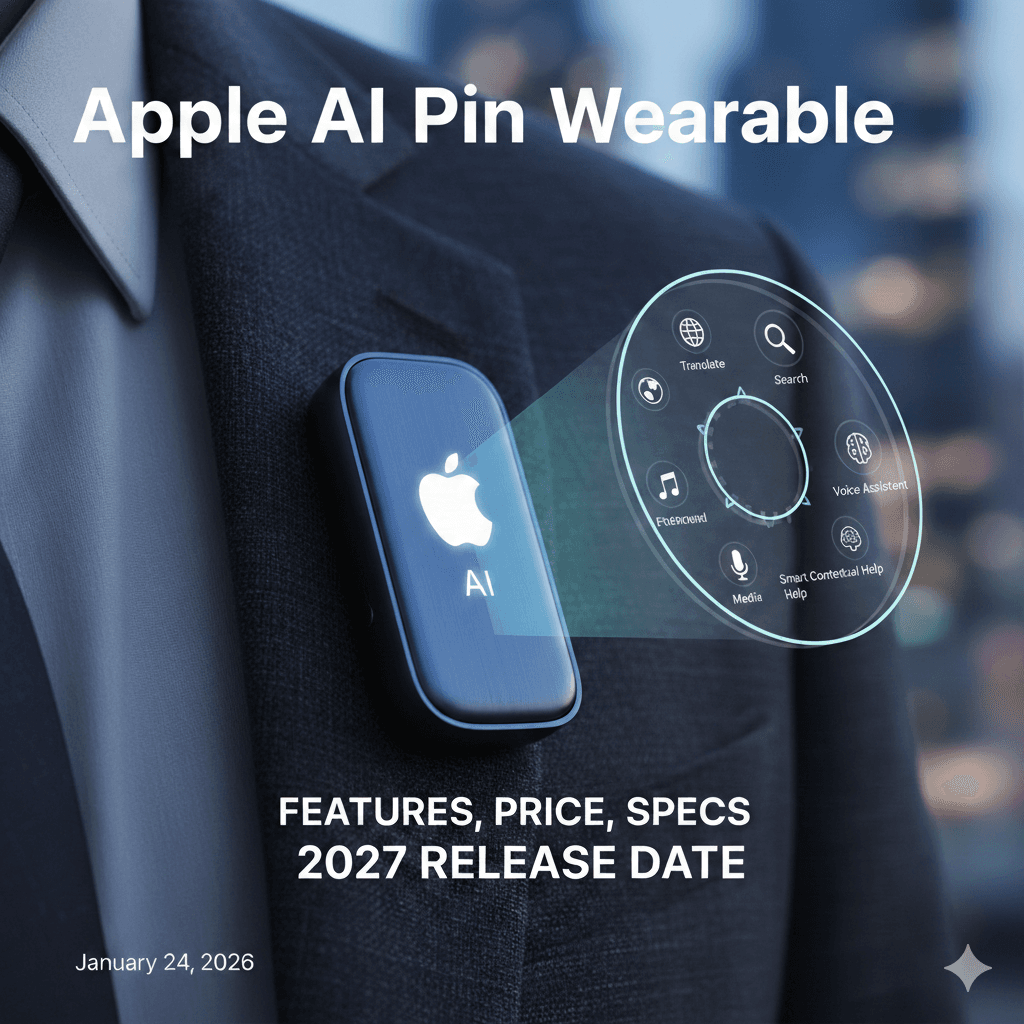
Apple's AI Pin: The Rumored Wearable That Could Change Everything (Or Nothing)
Published: January 24, 2026 | Updated: January 24, 2026 | Reading time: 8 minutes
Apple is reportedly working on something called an AI pin—a wearable device about the size of an AirTag with cameras and microphones. But the real question isn't what it is. It's whether anyone actually wants it.
What's This AI Pin Everyone's Talking About?
If you've been scrolling through tech news lately, you've probably seen the headlines. According to reports from The Information and other sources, Apple is actively developing an AI wearable device. Now, before you think this is just another "Apple does everything" story, there's something interesting about this particular rumor.
The device is reportedly the size of an AirTag—you know, those tiny tracking devices you attach to your keys or wallet. It would have cameras and microphones built in, which is pretty important for what Apple's imagining. But here's the thing that caught everyone's attention: it won't have a display. No screen. That's a pretty bold design choice in a world obsessed with screens.
Apple isn't jumping into this blindly. The company is planning to power this device with its advanced AI capabilities, expected to arrive with iOS 27. If everything goes according to plan, you might see this thing in stores as early as 2027.
So Why Would Apple Make This? (And Why Would You Want It?)
This is where things get genuinely interesting—and complicated. Apple's not the first company trying to make an AI wearable. You might remember the Humane AI Pin, which hit the market with a lot of hype and sold... well, not very much. It wasn't a bad piece of technology. It just didn't solve a problem people actually had.
That's the million-dollar question Apple is probably asking itself right now: What do people genuinely want from an AI pin?
The Three Reasons You Might Actually Want a Device Like This
Let's be honest—if you're going to carry another device, or if it's going to replace something you already have, it needs to be worth it. Experts and analysts break down the value proposition into three main areas:
- Information You Can't Get Any Other Way: This is the most obvious use case. You could ask your AI assistant simple questions like "Who directed Star Wars: The Last Jedi?" or "What's the weather?" Sounds mundane, but done right, it could be convenient.
- Context-Aware Intelligence: This is where things get sophisticated. Imagine asking your AI pin, "What's the weather going to be when my plane lands tomorrow?" The device would need to check your calendar, look up your flight information, and tell you what conditions you'll be walking into at your destination. That kind of contextual awareness is harder than it sounds.
- Visual Recognition and Real-Time Information: Here's where the cameras come in. You could point at a plant and ask, "What is this, and is it edible?" The device would need to identify what it's seeing and give you accurate information. You could theoretically do the same with unknown animals, plants, or objects around you.
Three Core Use Cases for AI Wearables
- Quick information retrieval without pulling out your phone
- Contextual questions that require knowledge of your calendar, location, and personal data
- Visual identification and analysis of things in your environment
What's the Deal With No Screen?
This is actually one of the smartest things about the rumored design. No screen means fewer distractions. No screen also means the device can be smaller and use less battery. But there's a deeper philosophy here too.
Think about it: if you're asking questions and getting answers through audio, you're not staring at a tiny screen squinting at information. The interaction model changes. It's more like having a conversation with an assistant rather than using another device.
That said, there's a challenge. How do you show results? Maps? Photos? Images the device recognizes? Without a display, Apple would need to be creative. Maybe it connects to your iPhone to show detailed information. Maybe it handles everything through voice. The practical details matter a lot here.
❓ Why would Apple choose not to include a display?
A screenless design reduces battery drain, keeps the device small (AirTag-sized), and aligns with Apple's philosophy of reducing screen time. It also encourages voice-based interaction instead of visual-based interaction, which is fundamentally different from how we use other devices. However, it also means users would need to rely on their iPhone for visual information—which brings its own trade-offs.
The Real Question: Is This Actually Better Than What You Already Have?
Here's the uncomfortable truth that Apple needs to figure out. You already have an iPhone. You have an Apple Watch. These devices already have access to your information, your calendar, your location data, and much more. They already have screens. They already have Siri.
What specific advantage would a pin-sized device offer that your existing devices don't?
Some people suggest the Apple Watch is actually the better form factor for this kind of thing. It's already on your wrist. It already has some of these capabilities. Apple could theoretically load a wearable AI assistant right into watchOS and call it a day.
But an outward-facing camera on a pin? That's something the Apple Watch doesn't have. A dedicated device gives you a camera you can point at things without looking like you're taking a photo or a video. That could matter for the visual recognition use cases.
❓ Why make an AI pin instead of just upgrading the Apple Watch?
The Apple Watch is designed to be worn on your wrist and primarily serves fitness and notification functions. A dedicated AI pin could feature an outward-facing camera optimized for visual recognition—something the Watch isn't really designed for. A pin could also be positioned as a more dedicated AI assistant, separate from your fitness tracker. However, from a practical standpoint, many people wonder if this is just feature creep in a new form factor.
The Broader Picture: What AI Wearables Need to Succeed
The success of any AI wearable—Apple's or anyone else's—depends on solving a real problem that existing devices don't already solve. The form factor should be determined by the use case, not the other way around.
Apple is famous for making devices people didn't know they wanted. The original iPhone wasn't the first smartphone. The Apple Watch wasn't the first smartwatch. But Apple has a track record of refining products and making them actually useful.
The question is whether an AI assistant truly needs its own device. Or whether Apple is better off integrating these capabilities deeper into products people already use.
What This Means for Early Adopters and Tech Enthusiasts
If Apple does release an AI pin in 2027, it'll likely arrive with the kind of polish and integration Apple is known for. It might work seamlessly with your iPhone, iPad, and Mac. It might have privacy features built in that competitors don't have. The Apple Intelligence system powering it will probably be legitimately impressive from a technical standpoint.
But the real metric for success? How many people actually want it. How many will pay for it. And how many will still use it six months after launch.
❓ When might Apple's AI pin actually launch?
According to The Information's reporting, Apple is aiming for a 2027 launch. This would align with the company's iOS 27 timeline and its advanced AI capabilities rollout. However, it's important to remember these are rumors based on internal Apple development reports—actual launch dates often slip, and Apple might decide to shelve the project entirely if it doesn't meet their standards.
The Competitive Landscape: Learning From Past Failures
Humane's AI Pin didn't fail because the technology was bad. It failed because it didn't convince people they needed it. Users found the interaction models clunky. The price was high. The advantages over a smartphone were minimal.
Apple has a significant advantage over previous AI pin makers: scale, distribution, and an ecosystem of existing products. If Apple makes an AI pin, millions of people will at least try it. The question is whether they'll keep using it.
What Would Make an AI Pin Actually Worth Your Money?
Think about your daily life. When do you actually need an AI assistant? When would you prefer talking to a pin over pulling out your phone? When would you need visual recognition? When would you desperately want contextual awareness?
The answers to those questions might seem obvious to you, or they might seem pretty vague. That's the challenge Apple faces. The device needs to solve actual problems, not create solutions looking for problems.
Final Thoughts: What Comes Next?
Apple's rumored AI pin represents the company betting that wearable AI is the next frontier. Maybe it is. Maybe people will love having a dedicated, screenless AI assistant on their collar or in their pocket. Maybe the visual recognition capabilities will change how people interact with the world around them.
Or maybe people will realize they already have everything they need on the devices they already carry, and this ends up being an expensive niche product.
The truth? We won't know until 2027, when (and if) Apple actually releases it. Until then, we're all just speculating about whether the future of AI is another device to charge, carry, and manage—or whether it's better integrated into the products we already can't live without.
❓ Will the Apple AI pin actually happen?
Apple is definitely working on it, according to recent reports. Whether it actually launches is another story. Apple has killed plenty of projects in development. The device would need to pass Apple's extremely high standards for design, functionality, and practical utility before it reaches consumers. If Apple decides the use cases don't justify a new product category, they might abandon it entirely or wait for better technology.
About This Article: This article is based on reporting from The Information, Inc.com, and other tech publications covering Apple's AI initiatives. Information about the AI pin remains speculative until Apple makes an official announcement.
Disclaimer: Apple has not officially confirmed the AI pin project. All information in this article is based on industry reports and analyst commentary.