GPT-5.6 Explained: Sol vs Terra vs Luna — What Developers Need to Know
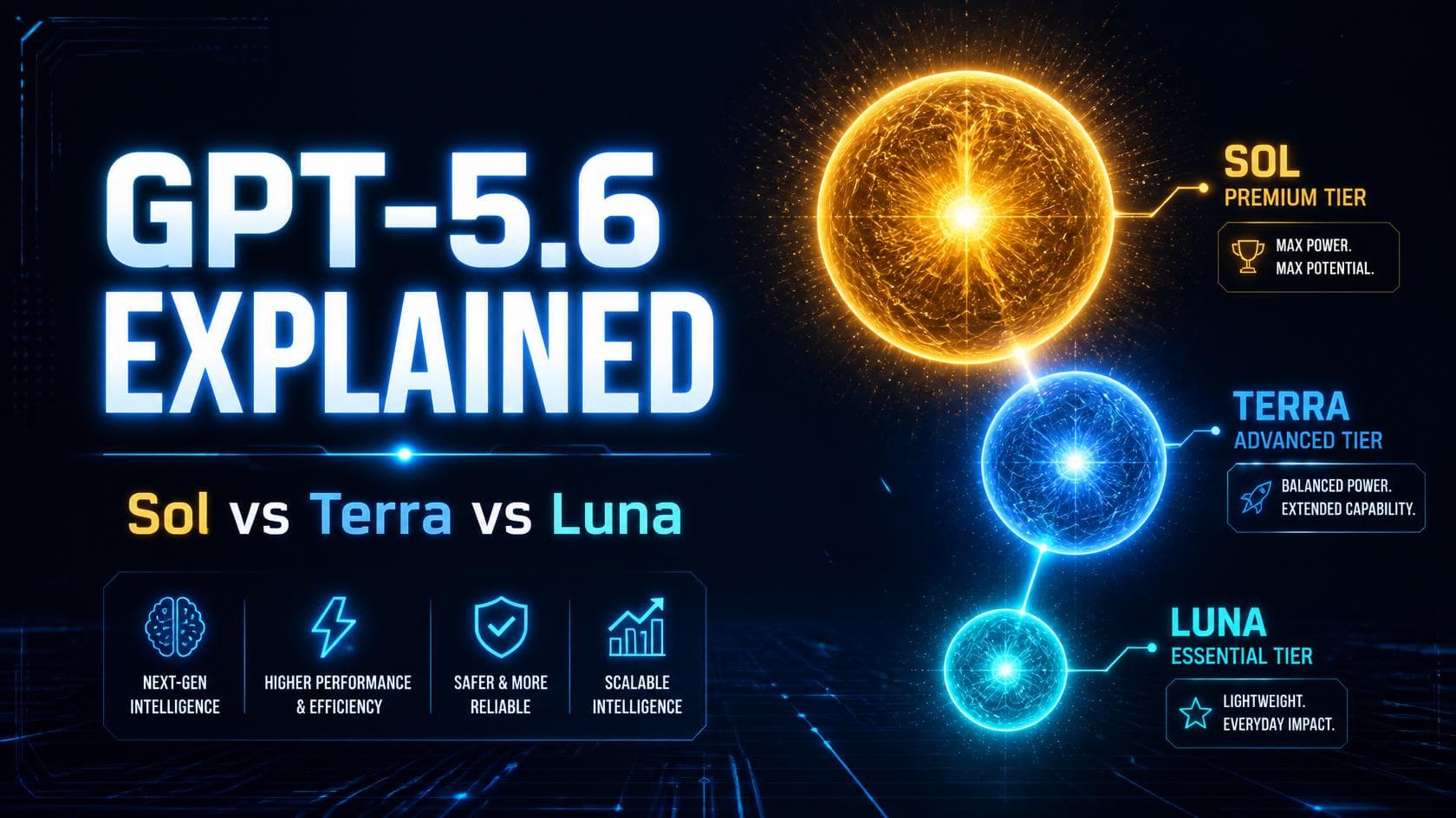
Table of Contents
GPT-5.6 Explained: What Sol, Terra, and Luna Mean for Developers
If your LinkedIn feed has been flooded with "GPT-5.6 changes everything" posts this week, you're not imagining it. OpenAI shipped GPT-5.6 to general availability on July 9, 2026, across ChatGPT, Codex, and the API — and unlike previous releases, it didn't come as one model. It came as three: Sol, Terra, and Luna.
If you're a developer, a fresher prepping for interviews, or just someone trying to figure out which model to actually use, this breakdown is for you.
Why OpenAI split GPT-5.6 into three models
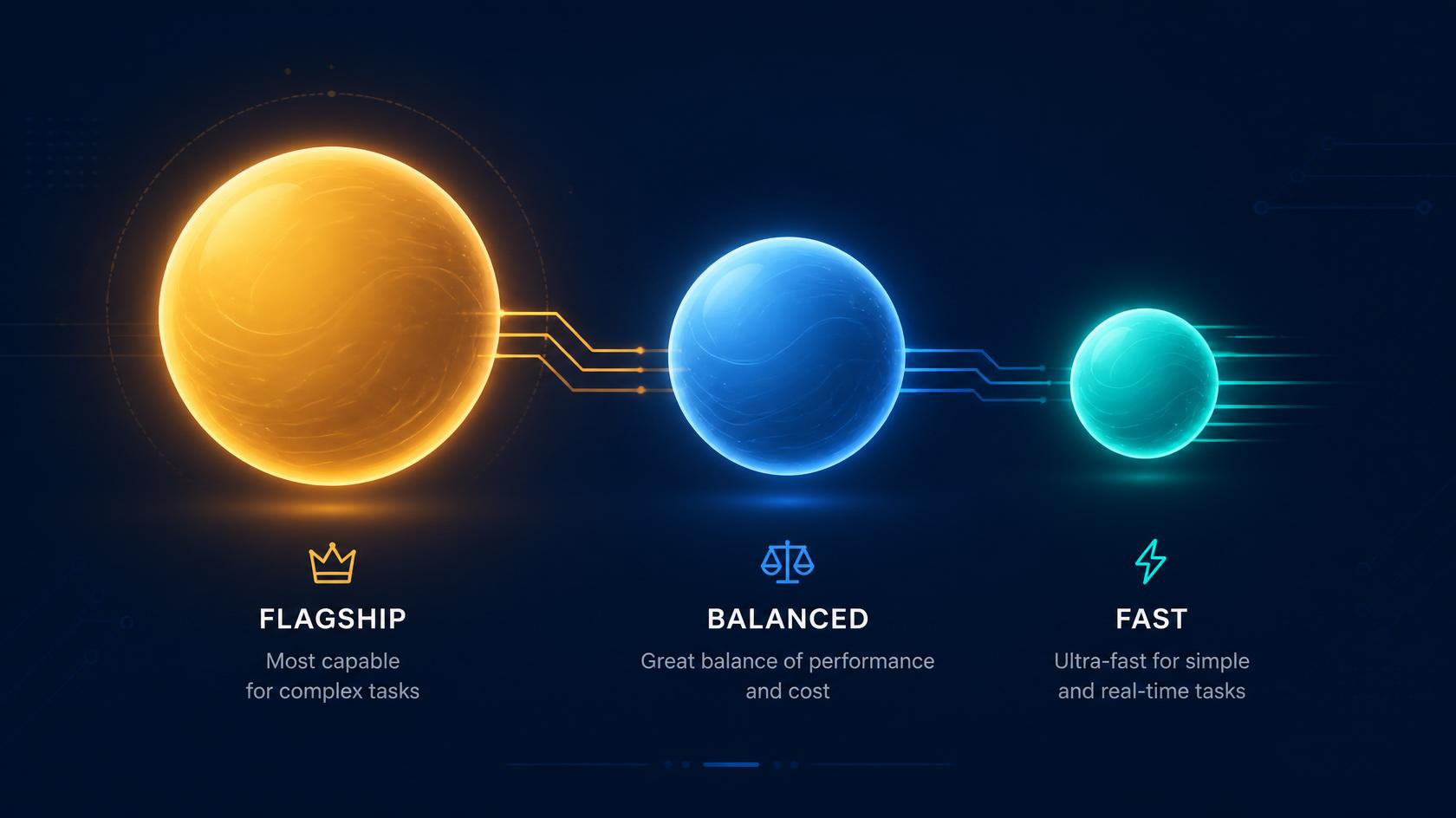
Every major AI lab used to ship one flagship model and call it a day. GPT-5.6 breaks that pattern. Instead of a single model trying to be good at everything, OpenAI now offers three tiers built for different jobs and different budgets:
Sol — the flagship, built for the hardest reasoning, coding, and agentic work
Terra — the balanced, everyday model
Luna — the fast, cheap option for high-volume, simpler tasks
This isn't just a pricing gimmick. Each tier is a genuinely different model with different strengths, and picking the right one matters if you're building anything on top of the API — or just deciding which one to use inside ChatGPT.
GPT-5.6 Sol: the flagship
Sol is what OpenAI is calling its strongest coding and reasoning model yet. It's built for:
Complex, long-running coding tasks
Agentic workflows (multi-step tasks where the model plans, acts, and adapts)
Cybersecurity work like vulnerability research, code review, and patching
Scientific and research-heavy tasks
Sol also introduces two new modes worth knowing about:
max reasoning effort — gives Sol more time to think through harder problems
ultra mode — instead of one AI working alone, ultra coordinates multiple subagents in parallel to finish complex tasks faster
On coding benchmarks, Sol (and especially Sol Ultra) posted some of the strongest scores seen from any model this year, edging out competing frontier models while using noticeably fewer tokens to get there. That efficiency angle is actually the bigger story — OpenAI is pitching Sol as not just smarter, but cheaper to run for the same quality of output.
GPT-5.6 Terra: the everyday workhorse
Terra sits in the middle. OpenAI describes it as matching the previous generation's flagship-level quality at roughly half the cost. If you're building a production feature — a chatbot, a RAG pipeline, a standard API integration — Terra is likely your default, not Sol.
Most teams don't need frontier-level reasoning for every request. Terra is built for exactly that reality: strong enough for real production use, priced so you're not burning your budget on every API call.
GPT-5.6 Luna: fast and cheap
Luna is the tier built for volume. Think classification, intent routing, content moderation, or summarization — tasks that don't need deep reasoning but happen thousands of times a day. If you're processing large batches of straightforward requests, Luna is the economical choice, and it still outperforms several older-generation models despite being the cheapest tier in the family.
Sol vs Terra vs Luna: quick comparison
Sol | Terra | Luna | |
|---|---|---|---|
Best for | Hard reasoning, agentic coding, cybersecurity | Everyday production workloads | High-volume, simple tasks |
Relative cost | Highest | ~Half of Sol | Lowest |
Special modes | max effort, ultra (multi-agent) | — | — |
Who should use it | Teams solving genuinely hard problems | Most developers, most of the time | Pipelines with high request volume |
How does GPT-5.6 compare to Claude?
This is the question every developer is actually asking. On agentic coding benchmarks, Sol's top-end "ultra" configuration edges out competing frontier models, including Anthropic's latest releases — though the gap is small, and Claude models remain highly competitive on efficiency and reliability for real-world coding workflows. Terra lands close to mid-tier Claude models on both price and capability, while Luna undercuts most budget-friendly options on the market.
The honest takeaway: there's no single "best" model anymore. There's a best model for your specific task and budget — and that's true whether you're comparing Sol vs Terra vs Luna internally, or GPT-5.6 vs Claude vs Gemini across vendors.
What this means if you're a developer or job seeker
A few practical takeaways:
"Which AI model" is now a routing decision, not a brand loyalty decision. Companies are increasingly building systems that route tasks to the cheapest capable model — Luna for simple stuff, Sol for hard problems. If you're interviewing for AI/ML or full-stack roles, understanding why this matters (cost, latency, quality tradeoffs) is a legitimate interview talking point.
Cybersecurity and agentic coding are the two areas OpenAI is pushing hardest. If you're building your skill roadmap, both are increasingly relevant for backend and platform engineering roles in 2026.
Token efficiency is becoming a real metric companies care about, not just raw benchmark scores. If you're working on any AI-powered feature — for a job, a side project, or an interview take-home — knowing how to reason about cost-per-task, not just accuracy, will set you apart.
Bottom line
GPT-5.6 isn't one model — it's a three-tier system built around a simple idea: not every task needs your most expensive AI. Sol for hard problems, Terra for everyday production work, Luna for volume. Understanding that shift is useful whether you're building with these models, comparing them against Claude and Gemini, or just trying to sound informed the next time it comes up in an interview.
Want to make sure your skills and interview prep are keeping up with how fast AI tooling is moving? Explore Cloudvyn's structured roadmaps for MERN and AI/ML to build a foundation that holds up regardless of which model wins this month.
Frequently Asked Questions
What's the difference between Sol, Terra, and Luna?
Sol is the flagship model, built for the hardest reasoning, coding, and agentic tasks. Terra is the balanced, everyday tier, offering strong production-quality performance at roughly half the cost of Sol. Luna is the fastest and cheapest tier, designed for high-volume, simpler tasks like classification and summarization.
What is GPT-5.6?
GPT-5.6 is OpenAI's latest AI model family, released to general availability on July 9, 2026. Unlike previous releases that shipped as a single model, GPT-5.6 comes in three tiers — Sol, Terra, and Luna — each built for different levels of task complexity and cost.
What is "ultra mode" in GPT-5.6?
Ultra is a new mode available with Sol that coordinates multiple AI subagents working in parallel to complete complex tasks faster, instead of relying on a single model working step by step.
Is GPT-5.6 better than Claude?
It depends on the task. Sol's top-end performance edges out competing frontier models on some coding benchmarks, but the gap is often small, and Claude models remain strong on efficiency and reliability. There's no single "best" model across the board — the right choice depends on your specific task, budget, and workflow.
Is GPT-5.6 available for free?
Access varies by plan. Free and lower-tier ChatGPT users typically get access to Terra, while paid plans (Plus, Pro, Business, Enterprise) can access Sol, Terra, and Luna, with different reasoning-effort options depending on the plan.
How much does GPT-5.6 cost via the API?
Pricing is tiered: Sol is the most expensive (built for hard reasoning tasks), Terra costs roughly half of Sol, and Luna is the cheapest, aimed at high-volume workloads. Exact rates are published on OpenAI's official pricing page and are worth checking directly, since API pricing changes frequently.
Why does GPT-5.6 matter for developers and job seekers?
GPT-5.6's tiered approach reflects a broader industry shift: companies are now routing tasks to the cheapest capable model rather than defaulting to the most powerful one everywhere. Understanding this tradeoff — cost vs. capability vs. latency — is increasingly relevant for AI/ML and full-stack interviews in 2026.