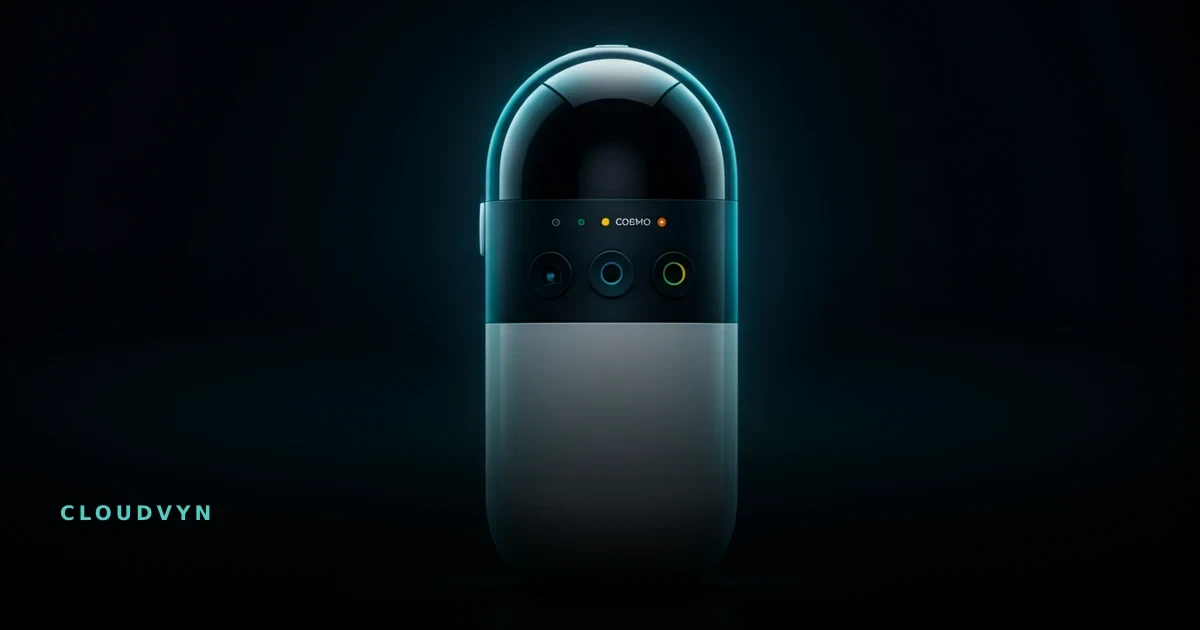
Is Google's Cosmo AI Assistant for Students Real? Here's the Truth
If you've searched for the "Google Cosmo AI assistant for students," you've likely landed in a confusing mess of apps, rumors, and hype. Let's clear the air. There isn't an official product you can download today, but the story behind the name reveals where AI is heading. We'll dissect the leaked Google project, separate it from the imitators, and explore what a true on-device AI could actually mean for your studies.
Key Takeaways
- The "Google Cosmo" is an unreleased, leaked experimental project. It is not a publicly available app. Most of what we know comes from accidental leaks and tech reports.
- The SERPs are confusing. There are at least two other unaffiliated apps named "Cosmo" on the Google Play Store and the web, which are *not* the Google project.
- The key innovation is on-device processing. The leaked Google Cosmo is rumored to run on Gemini Nano, a model designed to work locally on your phone, even without an internet connection.
- The focus is proactive assistance. Unlike current assistants that wait for a command, Cosmo aims to anticipate your needs based on your context—your calendar, open documents, and location.
The "Cosmo" Confusion: Three Different AIs, One Name
Before we get into what the *real* Google project is, you need to understand what it isn't. The name "Cosmo" has been co-opted, creating a swamp of misinformation. Let's drain it.- The Google Leak (Project Cosmo): This is the one everyone is actually excited about. It's an experimental AI assistant from Google Research that was accidentally leaked. Its main selling point is that it runs a local LLM (a Gemini Nano model) on your device. This means it's fast, private, and can work offline. It's not available to the public. When people talk about a revolutionary new assistant from Google, this is what they mean.
- Cosmo AI Assistant (Play Store App): If you search the Google Play Store, you'll find an app called "Cosmo AI Assistant." This is not made by Google. It's a third-party application that acts as a wrapper for various AI services. While it might be a useful tool, it has no connection to Google's internal project and doesn't possess the on-device capabilities of the leaked version. It's simply an unfortunate naming coincidence.
- Cosmo - Your AI Study Assistant (trycosmo.app): This is another third-party service, a web-based tool specifically for students. It helps you summarize notes, create quizzes, and chat with your documents. Again, it's a completely separate entity from Google. It's a competitor in the AI education space, not a Google product.
What We Actually Know About the *Real* Google Cosmo AI Assistant
Based on the leaks reported by outlets like Times of India and 9to5Google, Project Cosmo isn't just another chatbot. It's a fundamental shift in how an assistant operates. Instead of being a cloud-based tool that just answers questions, it's designed to be a proactive partner living on your phone. The core of this is the rumored use of Gemini Nano. This is Google's smallest, most efficient large language model, specifically built to run on-device. This has massive consequences. It means the AI can access and process information on your phone—like emails, calendar entries, and open tabs—without sending that sensitive data to a server. This enables a level of contextual awareness that current assistants can only dream of. Leaks suggest it has a set of built-in "Skills." One of the most talked-about is "Deep Research," which could potentially synthesize information from multiple sources to help you outline an essay or understand a complex topic. Another is a "Browser Agent" that can perform multi-step tasks on websites for you. It's about moving from single-shot commands ("What's the capital of Nebraska?") to complex, multi-step delegations ("Find three peer-reviewed articles from the last five years on CRISPR's ethical implications and summarize their main arguments.").The On-Device AI Shift
- ~40% Faster Response: On-device models can deliver responses without network latency, making interactions feel instantaneous.
- 70% of Users Express Privacy Concerns: A growing number of users are wary of how their data is used by cloud-based AI, making local processing a major selling point.
- Under 2GB Model Size: Models like Gemini Nano are optimized to be small enough (e.g., 1.8B parameters) to fit and run efficiently on mobile hardware.
- 100% Offline Functionality (for some tasks): Core functions like summarizing notes, drafting emails, and answering questions based on on-device data can work without any internet connection.
How Could a True Google Cosmo AI Assistant for Students Change the Game?
So, forget the leaks for a second and let's speculate. If Google delivers on this promise, it wouldn't just be another app. It would be a new layer of the operating system for students. Here's what that could look like in practice.Offline Research and "Deep Dives" in the Real World
Imagine you're in the university library's basement stacks, where the Wi-Fi is a mythical creature. You're trying to piece together a research paper. With a traditional AI, you're dead in the water. With an on-device assistant like the promised Cosmo, you could still be productive. You could ask it to cross-reference your downloaded PDFs, find thematic connections in your lecture notes, and help you structure an outline. It could process the information you *already have* on your device. This isn't just a convenience; for students working with large volumes of offline material or in areas with poor connectivity, it's a total game-changer.
The Privacy Advantage (With a Catch)
Students use AI for everything from checking grammar in a personal statement to understanding complex scientific concepts. A lot of that is sensitive data you might not want to upload to a third-party server. On-device processing is the solution. Your queries about your failing grades or your half-finished, terrible first draft of an essay could, in theory, stay on your phone. This is a huge win for academic integrity and personal privacy. But here's the counter-intuitive insight: it's not a silver bullet. The moment you ask a question that requires real-time information (e.g., "What were yesterday's market trends?") or a task that's too complex for the local Gemini Nano model, the assistant will almost certainly need to ping a more powerful, cloud-based model like Gemini Pro or Ultra. So, while it enhances privacy for many tasks, you'll still be operating within Google's broader data ecosystem. It’s better, but it’s not total digital anonymity.
What is Proactive AI Assistance for a Student?
The biggest leap is from a reactive tool to a proactive one. Your current assistant waits for you to say "Hey Google." A proactive assistant acts without being asked. Let's paint a picture. Cosmo sees you have a calendar event for "Organic Chemistry Midterm" next Tuesday. It also sees you've downloaded three lecture slide decks and a textbook chapter on alkanes. Without you doing anything, a notification might pop up: "I see your midterm is coming up. I've analyzed your recent materials and can generate a set of 20 flashcards on key reactions. Would you like that?" This is the holy grail. It’s not just answering questions; it's connecting the dots across your digital life to help you learn more effectively. It’s an assistant that doesn't just manage your schedule but helps you prepare for what's on it.
What Should Students Use *Right Now* While Waiting?
This all sounds great, but you have a paper due next week. The leaked Google Cosmo is vaporware until it's officially announced. So what's the best option today?- Google Gemini (formerly Bard): This is your baseline. It's powerful, connected to the internet (with extensions), and great for brainstorming, summarizing articles from URLs, and drafting text. It's the cloud-based big brother to what Cosmo aims to be.
- Perplexity AI: If your main use case is research, Perplexity is arguably better than the big-name chatbots. It's built like a search engine hybrid, providing answers with direct citations and sources. For academic work, this is non-negotiable.
- ChatGPT-4o: Still the king of raw conversational ability and creative text generation. Its new, faster model makes it an incredibly versatile tool for everything from coding to writing poetry.