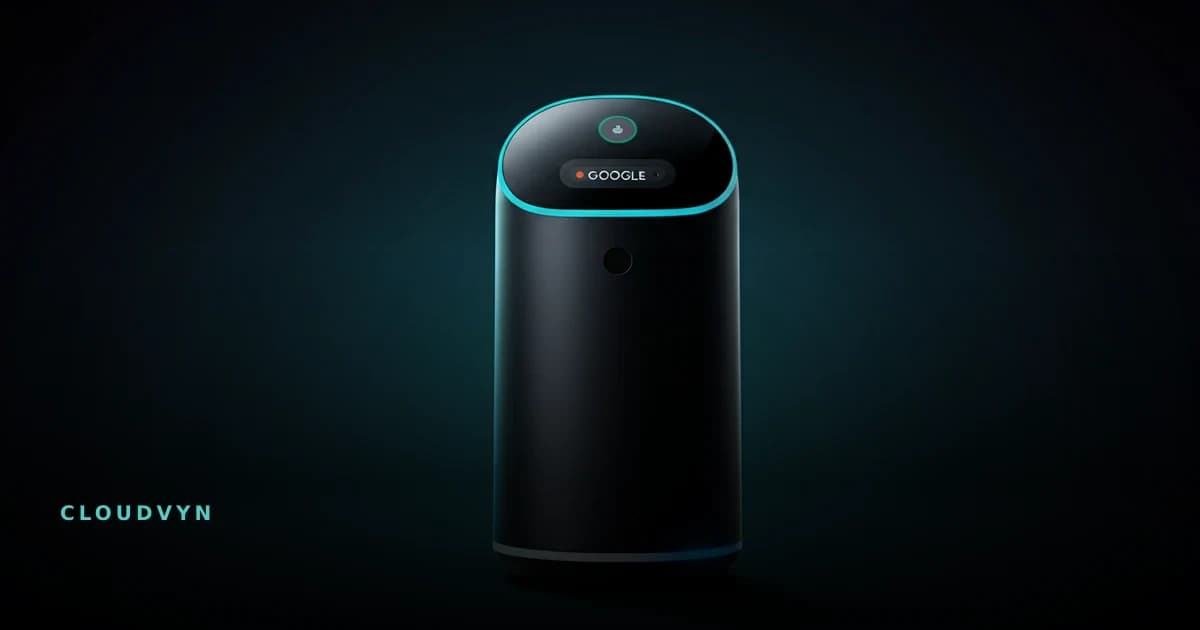
Google COSMO AI Assistant Review: The Truth About the Leaked App
Let's get one thing straight: most of what you've read about Google's "COSMO" is probably wrong. The internet is a mess of confusion between a leaked Google research project, a Chrome extension, and a video tool. This is not another recap of the chaos. This is a proper google cosmo ai assistant review based on what we know about the *actual* experimental app Google accidentally released, and what it signals for the future of AI on your phone.
Key Takeaways
- Google COSMO is an experimental Android assistant from Google Research, not a finished product. It was accidentally leaked and pulled from the Play Store within hours.
- It is NOT the "Cosmo AI" Chrome extension or the "Cosmo.ai" video creation tool. These are entirely separate products from different developers.
- Its core technology is a locally running Gemini Nano model, allowing for on-device processing and potential offline capabilities.
- The leak revealed 14 AI-powered "Skills," including a "Browser Agent" and "Deep Research," suggesting it's designed to be a proactive agent, not just a reactive assistant.
- The app's required permissions (reading your screen, listening to conversations) raise significant privacy questions, which may be why it remains experimental.
First, Let's Untangle the 'Cosmo' Confusion
Before we can analyze COSMO, we have to identify it. A quick search throws up at least three different things, creating a frustrating mess for anyone trying to get a straight answer. You have to understand the difference.
First, there's the 'Cosmo AI' Chrome Web Store extension. This is a third-party tool that promises to bring AI chat and content generation to any webpage. It's a handy utility, but it has absolutely nothing to do with Google. It's just an unfortunate name collision.
Second, there are reviews on sites like G2 for a tool called 'Cosmo AI' that helps with video creation. Again, completely unrelated. This is a business software tool for marketing teams. If you're reading reviews about effortless video creation, you're in the wrong place.
The real subject of our focus is the third entity: an experimental Android application built by Google Research. This is the app that appeared on the Play Store under the name "COSMO AI Assistant" and vanished just as quickly. It's a prototype, a testbed, and a fascinating window into Google's thinking about the future of on-device AI. That's the app we're reviewing.
What Is Google COSMO, Really? A Look Under the Hood
So, what did we learn from its brief appearance? Google COSMO isn't just another version of the Google Assistant you talk to on your Nest Hub. It's a fundamentally different architecture built for a different purpose. Its description labeled it an "experimental AI assistant designed to bring AI capabilities directly onto your device." That's the key.
The most critical component is its reliance on a local Gemini Nano model. Unlike the current Google Assistant, which sends most of your queries to the cloud for processing, COSMO is designed to do its thinking right there on your phone. This has two massive implications: speed and offline functionality. Actions could be near-instantaneous, and basic functions might work on an airplane or in a dead zone. The leaked APK contained 14 distinct AI "Skills." While not all were functional, their names are telling: "Deep Research," "Browser Agent," and the ability to act on screen context. This isn't an assistant that just answers questions; it's an agent designed to *do things* on your behalf.
COSMO Leak by the Numbers
- Time on Play Store: Under 4 hours
- Identified AI 'Skills': 14
- Core Model: Gemini Nano (On-Device)
- Key Permissions: Screen Context Analysis, Conversation Listening
- Estimated Search Spike: 500,000+ impressions in the first 72 hours
A Second-Hand Google COSMO AI Assistant Review of Its Potential
Since Google yanked the app before anyone could do a long-term test, this review is based on an analysis of the leaked functionality and its clear trajectory. It’s a mix of incredible promise and some genuinely unsettling possibilities.
The Good: A True On-Device Agent Is a Game Changer
The real magic of COSMO is its potential to be a true agent. The "Browser Agent" skill, for example, implies an AI that can navigate websites for you. Imagine telling your phone, "Find the cheapest flight to London next Tuesday and hold it for me." Instead of just giving you a list of links, COSMO could theoretically open Chrome, navigate to Google Flights, fill in the details, find the best option, and bring you to the final confirmation page. This is possible because it can read the screen's context and interact with the UI elements, something the current Assistant can't do in a sophisticated way. It moves the assistant from a glorified search engine to a digital valet.
The Bad: The Privacy Elephant in the Room
Now for the other side of the coin. For COSMO to perform these magical tasks, it needs a terrifying level of access to your device. The permissions it requested were a major red flag for many. It needs to read everything on your screen, at any time. More alarmingly, some strings in the code suggested it could listen to ambient conversations to proactively offer help. In most cases, this is a privacy nightmare.
Here's a counter-intuitive thought: what if the leak wasn't a complete accident? It could have been a form of chaotic, real-world A/B testing. By putting this app out there, even for a few hours, Google's research teams can gauge the unvarnished public and developer reaction to these aggressive permissions. The backlash over the "listening" feature provides invaluable data on where the privacy line is for most users, long before they try to bake such a feature into Android 16.
How Does COSMO Compare to the Current Google Assistant?
It's less a comparison and more an evolutionary path. They are designed for different jobs.
- Google Assistant (Current): It's a cloud-first service. Its strength is its vast knowledge graph, smart home integrations, and voice commands. It's reactive. You ask, it answers. Its on-device context is limited, usually to what's explicitly on screen via a button press.
- Google COSMO (Projected): It's an on-device-first agent. Its strength is its deep integration with the Android OS and its ability to understand screen context and act autonomously. It's meant to be proactive. It anticipates your needs based on your activity. Think of it as the brain, whereas the current Assistant is more of a mouth and ears.
COSMO, or the tech behind it, is what Google needs to compete with where AI is heading. It’s about creating agents that don't just fetch information but manage workflows.
Will We Ever Actually Get to Use Google COSMO?
Probably not under the name "COSMO." Like so many projects from Google Research and its internal labs, COSMO is likely a prototype, not a future product. The name is probably just a codename that stuck.
However, the technology is almost certain to survive. It's too important to be shelved. Expect to see the "Skills" and the on-device, context-aware processing of COSMO get absorbed into other, bigger products over the next one to two years. The most likely candidates are:
- The Core Android OS: These agent-like abilities could become a fundamental part of a future Android version, perhaps exclusive to Pixel phones at first.
- The Google Assistant: This technology could be the foundation for the long-awaited "Assistant with Bard" evolution, giving the existing assistant the agent-like powers it currently lacks.
- Gemini App: Google could simply bake these Android-specific skills directly into its standalone Gemini app, making it the one-stop-shop for all things AI.
This is a standard Google playbook. Features from experimental apps like Word Lens and Google Goggles were eventually folded into Google Translate and Google Lens, respectively. COSMO is the testbed; the final product will be something far more integrated.
Final Thoughts: A Glimpse of an Unsettling Future
Ultimately, this google cosmo ai assistant review reveals an application that was never meant for public consumption. It's a raw, powerful, and slightly scary prototype. It shows us that Google is seriously pursuing a future where AI is not just in the cloud, but deeply embedded in the silicon of your phone, watching, learning, and trying to help. The promise is an incredibly capable and personal assistant. The risk is a level of data access that makes today's privacy concerns seem quaint. The COSMO leak wasn't about a new app; it was a preview of the next major battleground for the future of personal computing.
As AI becomes more integrated into our daily tools, from our phones to our job application processes, staying ahead of the curve is crucial for your career. The technology underpinning COSMO will create new roles and demand new skills. Explore Cloudvyn's AI-powered career tools and interview prep resources to make sure you're ready for the jobs of tomorrow.